The problem with foster care training
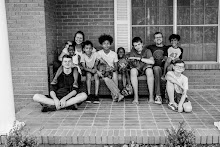
We have officially started our journey to adopt two more boys from state custody here in Arkansas. Truthfully we never stopped training for this. Little Rock has an incredible subculture of families who foster/adopt and when you join it's almost like becoming a part of a cult. (But even better because you get all of the community and none of the Kool-aid!)
We have found multiple opportunities here to expand our knowledge base on foster/adoption through various church connections. On Tuesday nights we have been attending a really good class at Fellowship on parenting kids from hard places. Like other foster parent trainings we've been to, they all do a really good job preparing you to handle some of the behaviors that are unique to children with rough starts in life; things like aggression, hyper vigilance, food hoarding, developmental delays, sexual acting out, lying, issues with bowel and bladder functioning, and on and on. Read that list again and you will see there are some real heavy weight behaviors that definitely need enlightened parenting techniques.
However, the problem with foster care training is that it completely prepares you to love a foster kid. Did that statement throw you off? I mean it exactly the way it sounds: the problem with foster care training is that it prepares you to love a foster kid.
But I don't have foster kids anymore. I have sons.
And while it may sound like only a semantics game, it is really so much more than that. It's about the way you view your child. It's about the hopes you have for them. It's about your expectations.
It's about the label.
The label "foster kid" is almost like a diagnosis. As an OT, I have worked with special needs kids long enough to know that label is a hot button word. For sure, a label or diagnosis can give your child access to services they need like therapy and 504 plans. For example, last year I needed my son's kindergarten teacher to know his label and know that he was from the foster care system because I needed her to be more patient with him than other children. I needed her to have compassion when he soiled his pants at school and to realize that it didn't matter what teaching tools or cute stickers she used, he would not be retaining any ABC's until he felt safe in her classroom. And she was great about it.
I like labels and categories because they give you a frame of reference from which to begin interpreting and understanding someone. Knowing a place to start from can change the way you approach interactions and lead to a more successful relationship.
OK so I just typed the above statement out like it was gospel, but it's really just from my own experiences. Do you agree with it? I promise I don't mean it as arrogant and manipulative as it sounds:)
Let's see...
Do you make the same jokes around your republican friends as your democrat friends?
-Or do you change your behavior to be socially appropriate because of what you know about their categorical philosophies.
Do you expect the same efficiency from the grocery bagger when the employee has Down Syndrome?
-Or do you slow down and adapt to their abilities.
Do you demand 100% compliance from your terrible two-year old?
-Or do you chose your battles?
I'm not talking about changing your values because you are in a different setting. Not at all. I'm simply talking about changing your behavior and expectations based on the people you are interacting with.
In 2012, my husband and I were perfectly trained to successfully parent foster kids and for almost two years we did just that: We diaper changed, and played with, and educated, and filled out med forms, and potty trained, and bonded with, and had monthly fire drills, and tucked in, and disciplined and yes, even truly LOVED our foster boys. Then in May of 2013 a judge changed their label with one court hearing, but my mind was slow to follow. They were not my foster kids anymore, they were now suddenly my sons. And although the adoption was something we definitely wanted and had fought for, the boys had lived in the "foster kid category" for so long that mentally it was a hard transition for me to make.
I have talked with other moms who have shared this same phenomenon too. It seems to resonate particularly true for moms who had biological children first and then adopted through foster care.
If you can get us moms feeling emotionally safe and completely vulnerable, we will confess to you that we NEVER think about our bio kids growing up and struggling with drugs, or sexual promiscuity or going in and out of jail... I'm not saying it won't happen just that we never worry about it...but the thoughts very much sneak in when we picture the futures of our kids adopted from hard places.
Do you know how hard that is for me to say? Do you know how un-PC it is to admit you have different expectations for your bio kids than your adopted kids? Do you know that I will get crucified for this?
But that's the dangerous reality of seeing people with labels. Labels have limits. And it's very hard to change your expectations of someone when you began your relationship with limits.
But what's even more dangerous is when a child has a relationship with himself that is based on a label, albeit an accurate label, but one they bear because of someone else's doing.
The next two boys that join our family will be a bit older, likely between the ages of 5 and 8. They will have been in the system for a while and they will know that they are foster kids. They will have their own definition of what that means and it will probably include words like unwanted and unworthy. Can you imagine the shame?
My younger boys did not know they were foster kids. I didn't want them to know. I didn't want them to see themselves with that lens. I hated using the word because of the stigma. Even now my brain still does this funky thing where if I am telling someone a a story from when my boys were in foster care I will reference them by their old names like I'm talking about a completely different person. I don't do it on purpose. It's the weirdest thing. My mouth spits out a name mid-sentence that I haven't called them in two years. It's so weird.
But a few weeks ago I told them the truth. I was in the van with all six and we were talking about adding the new boys to the family. I was trying to explain to Judah that in his story, Mom made some bad choices, but then she did the right thing and the Judge let her have another chance. He remembers moving back in with her, but also remembers returning back to us. Then I had to explain that with our new brothers their birth parents never made the right choice and the Judge didn't let them have another chance. "They are out there somewhere right now living with their foster parents, just like when you first came to live with us you were a foster kid and we were your foster parents."
I continued on with Judah and told him everything. I told him how the Judge still gives us money every month to help take care of him. I explained how it is expensive to raise 6 boys and Mommy and Daddy never planned to have so many kids. "The judge gives us money and helps us because he knows thats the only way we could take care of you and he wanted you to be in our family." You should have seen the competitive delight on his face when I told him that the Judge is also going to let him go to college in Texas for free, but his older brothers will have to pay a lot of money.
I told him everything, because I wanted him to know his whole story, not to be labeled by it, but to own it. The truth will set you free they say. And Cory and I are big believers that we want our kids to know their truths as early as possible so that we can help them re-frame their story and not be victims of it. Everyone else in Judah's world already knew that he was a foster kid: his grandparents, his Sunday school teachers, his birth mom, even his older brothers. And now he knows too.
He WAS a foster kid. But now he IS our son.
Honestly the Judge announced the change that May morning like it was an inarguable declaration, but it has been more of a process to make it reality for me. Early on I used to wake up every day and ask myself, "Is it the same yet? Do I love them the same yet?" Then I got smart and quit torturing myself. I realized as long as I treated my new boys the same and THEY FELT loved just the same then it didn't really matter what I thought or felt.
I knew the matching feelings would come and they did. There are times (like yesterday) when an old "foster kid" behavior resurfaces and worry and fear of the future creep into my thoughts, but those are getting fewer and farther between. For the most part the label and all the limits that go with it don't exist for me anymore. All three have been redeemed. And yes it was easier for each one, the younger they were. But it was all excruciating and painful and THRILLING to be a part of the transformation. I can see why God is about the business of redeeming people. It is an incomparable adventure. And that's why we want to partner with Him and do it again.
So now here we sit on the brink of our official Arkansas foster parent training. There will be lots of classes and statistics and truths taught to us, but there will also be one glaring problem with all of it. Because the training wil ready my mind to bring in two more foster kids, and I need my heart to be preparing for two more sons.
We have found multiple opportunities here to expand our knowledge base on foster/adoption through various church connections. On Tuesday nights we have been attending a really good class at Fellowship on parenting kids from hard places. Like other foster parent trainings we've been to, they all do a really good job preparing you to handle some of the behaviors that are unique to children with rough starts in life; things like aggression, hyper vigilance, food hoarding, developmental delays, sexual acting out, lying, issues with bowel and bladder functioning, and on and on. Read that list again and you will see there are some real heavy weight behaviors that definitely need enlightened parenting techniques.
However, the problem with foster care training is that it completely prepares you to love a foster kid. Did that statement throw you off? I mean it exactly the way it sounds: the problem with foster care training is that it prepares you to love a foster kid.
But I don't have foster kids anymore. I have sons.
And while it may sound like only a semantics game, it is really so much more than that. It's about the way you view your child. It's about the hopes you have for them. It's about your expectations.
It's about the label.
The label "foster kid" is almost like a diagnosis. As an OT, I have worked with special needs kids long enough to know that label is a hot button word. For sure, a label or diagnosis can give your child access to services they need like therapy and 504 plans. For example, last year I needed my son's kindergarten teacher to know his label and know that he was from the foster care system because I needed her to be more patient with him than other children. I needed her to have compassion when he soiled his pants at school and to realize that it didn't matter what teaching tools or cute stickers she used, he would not be retaining any ABC's until he felt safe in her classroom. And she was great about it.
I like labels and categories because they give you a frame of reference from which to begin interpreting and understanding someone. Knowing a place to start from can change the way you approach interactions and lead to a more successful relationship.
OK so I just typed the above statement out like it was gospel, but it's really just from my own experiences. Do you agree with it? I promise I don't mean it as arrogant and manipulative as it sounds:)
Let's see...
Do you make the same jokes around your republican friends as your democrat friends?
-Or do you change your behavior to be socially appropriate because of what you know about their categorical philosophies.
Do you expect the same efficiency from the grocery bagger when the employee has Down Syndrome?
-Or do you slow down and adapt to their abilities.
Do you demand 100% compliance from your terrible two-year old?
-Or do you chose your battles?
I'm not talking about changing your values because you are in a different setting. Not at all. I'm simply talking about changing your behavior and expectations based on the people you are interacting with.
In 2012, my husband and I were perfectly trained to successfully parent foster kids and for almost two years we did just that: We diaper changed, and played with, and educated, and filled out med forms, and potty trained, and bonded with, and had monthly fire drills, and tucked in, and disciplined and yes, even truly LOVED our foster boys. Then in May of 2013 a judge changed their label with one court hearing, but my mind was slow to follow. They were not my foster kids anymore, they were now suddenly my sons. And although the adoption was something we definitely wanted and had fought for, the boys had lived in the "foster kid category" for so long that mentally it was a hard transition for me to make.
I have talked with other moms who have shared this same phenomenon too. It seems to resonate particularly true for moms who had biological children first and then adopted through foster care.
If you can get us moms feeling emotionally safe and completely vulnerable, we will confess to you that we NEVER think about our bio kids growing up and struggling with drugs, or sexual promiscuity or going in and out of jail... I'm not saying it won't happen just that we never worry about it...but the thoughts very much sneak in when we picture the futures of our kids adopted from hard places.
Do you know how hard that is for me to say? Do you know how un-PC it is to admit you have different expectations for your bio kids than your adopted kids? Do you know that I will get crucified for this?
But that's the dangerous reality of seeing people with labels. Labels have limits. And it's very hard to change your expectations of someone when you began your relationship with limits.
But what's even more dangerous is when a child has a relationship with himself that is based on a label, albeit an accurate label, but one they bear because of someone else's doing.
The next two boys that join our family will be a bit older, likely between the ages of 5 and 8. They will have been in the system for a while and they will know that they are foster kids. They will have their own definition of what that means and it will probably include words like unwanted and unworthy. Can you imagine the shame?
My younger boys did not know they were foster kids. I didn't want them to know. I didn't want them to see themselves with that lens. I hated using the word because of the stigma. Even now my brain still does this funky thing where if I am telling someone a a story from when my boys were in foster care I will reference them by their old names like I'm talking about a completely different person. I don't do it on purpose. It's the weirdest thing. My mouth spits out a name mid-sentence that I haven't called them in two years. It's so weird.
But a few weeks ago I told them the truth. I was in the van with all six and we were talking about adding the new boys to the family. I was trying to explain to Judah that in his story, Mom made some bad choices, but then she did the right thing and the Judge let her have another chance. He remembers moving back in with her, but also remembers returning back to us. Then I had to explain that with our new brothers their birth parents never made the right choice and the Judge didn't let them have another chance. "They are out there somewhere right now living with their foster parents, just like when you first came to live with us you were a foster kid and we were your foster parents."
I continued on with Judah and told him everything. I told him how the Judge still gives us money every month to help take care of him. I explained how it is expensive to raise 6 boys and Mommy and Daddy never planned to have so many kids. "The judge gives us money and helps us because he knows thats the only way we could take care of you and he wanted you to be in our family." You should have seen the competitive delight on his face when I told him that the Judge is also going to let him go to college in Texas for free, but his older brothers will have to pay a lot of money.
I told him everything, because I wanted him to know his whole story, not to be labeled by it, but to own it. The truth will set you free they say. And Cory and I are big believers that we want our kids to know their truths as early as possible so that we can help them re-frame their story and not be victims of it. Everyone else in Judah's world already knew that he was a foster kid: his grandparents, his Sunday school teachers, his birth mom, even his older brothers. And now he knows too.
He WAS a foster kid. But now he IS our son.
Honestly the Judge announced the change that May morning like it was an inarguable declaration, but it has been more of a process to make it reality for me. Early on I used to wake up every day and ask myself, "Is it the same yet? Do I love them the same yet?" Then I got smart and quit torturing myself. I realized as long as I treated my new boys the same and THEY FELT loved just the same then it didn't really matter what I thought or felt.
I knew the matching feelings would come and they did. There are times (like yesterday) when an old "foster kid" behavior resurfaces and worry and fear of the future creep into my thoughts, but those are getting fewer and farther between. For the most part the label and all the limits that go with it don't exist for me anymore. All three have been redeemed. And yes it was easier for each one, the younger they were. But it was all excruciating and painful and THRILLING to be a part of the transformation. I can see why God is about the business of redeeming people. It is an incomparable adventure. And that's why we want to partner with Him and do it again.
So now here we sit on the brink of our official Arkansas foster parent training. There will be lots of classes and statistics and truths taught to us, but there will also be one glaring problem with all of it. Because the training wil ready my mind to bring in two more foster kids, and I need my heart to be preparing for two more sons.
posted by Christina at
2:07 PM


1 Comments:
Your family is precious to me. Your boys--all six of them--are precious to me.
Your heart is so very, VERY precious to me.
Post a Comment
Subscribe to Post Comments [Atom]
<< Home